LTMC CNC Busbar Machine Egypt

Three-Station Busbar Machine Technical Guide for Egyptian Factories — LT 303/503/803
Release time:
2026-11-10
Models: LT / LTMC 303U-3-C / 503U-3-C / 803U-3-C
Type: Three-station busbar machine (punching–cutting–bending) for Egyptian factories
Quick answer
A three-station busbar machine (also called a 3-in-1 busbar processing machine) integrates punching, cutting/shearing, and bending in one frame so copper or aluminum busbars for switchgear, transformers, and power distribution can be fabricated without transferring bars between three separate tools. On LT / LTMC models 303U-3-C, 503U-3-C, and 803U-3-C, three hydraulic units can run in parallel or in sequence. Size the machine by your largest width × thickness, hardest hole family, and hardest bend family—not by a generic “best machine” claim. That is the practical starting point for Egyptian factories in Cairo, 10th of Ramadan and Alexandria.
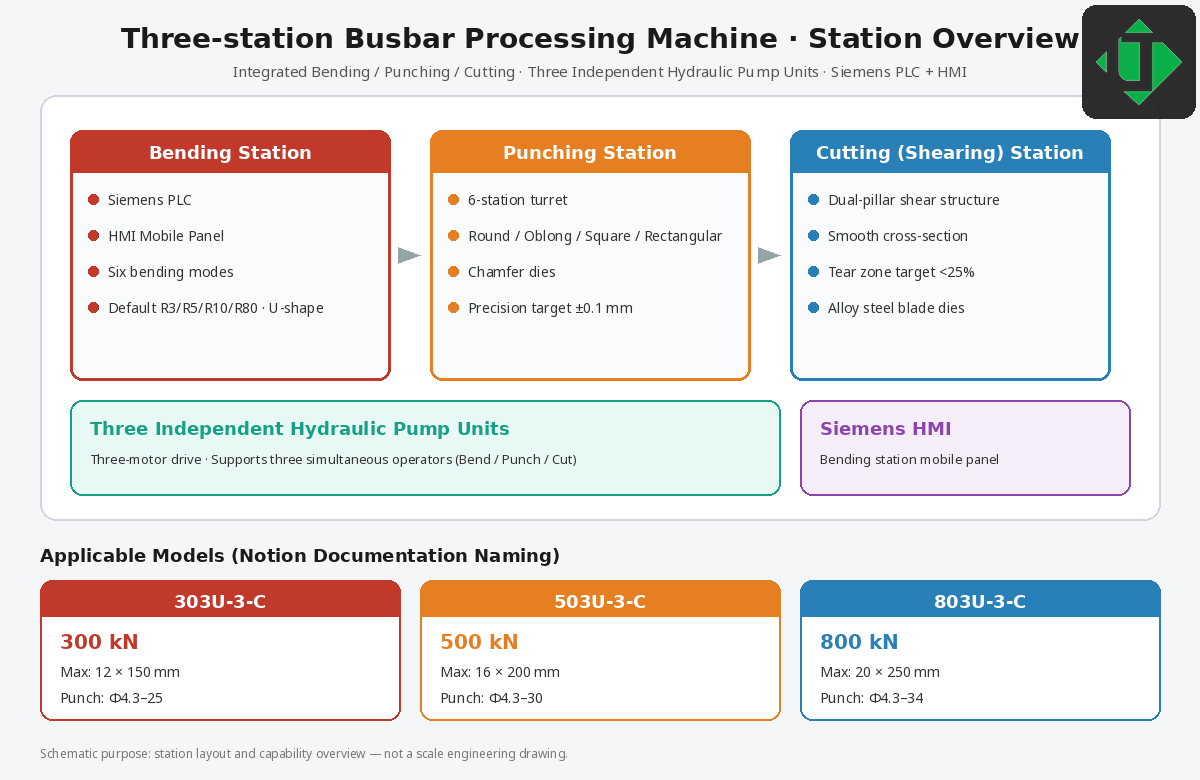
Three-station layout overview: bending, punching, cutting + three hydraulic pump units + Siemens HMI
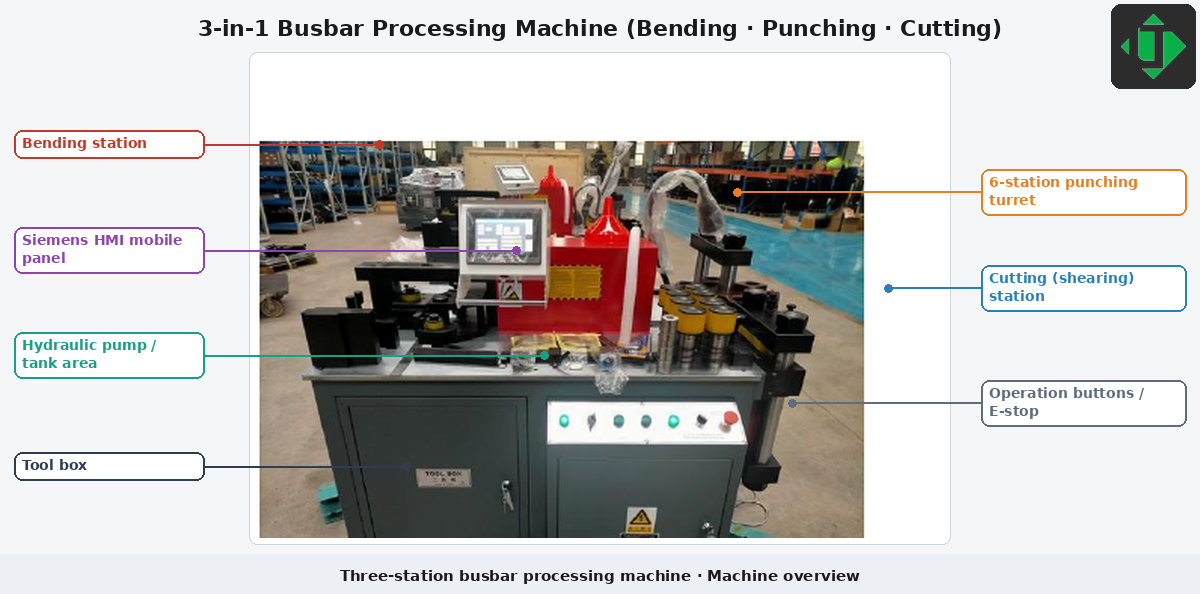
Machine overview with English callouts (stations, Siemens HMI, hydraulic area, controls)
Document purpose
This page is a three-station technical guide for Egyptian panel builders, procurement / RFQ teams, and engineering readers who need verifiable entities. It uses LT / LTMC model names 303U-3-C / 503U-3-C / 803U-3-C. Where public pages differ, treat the order acknowledgment + FAT samples as the source of truth.
1. Entity glossary
- Three-station / 3-in-1 busbar machine: one frame with punch + cut + bend stations.
- Busbar: flat copper or aluminum conductor bar for switchgear and distribution.
- Punching station: hydraulic station for round, oblong, rectangular, square holes (and chamfers).
- Cutting / shearing station: hydraulic length cut with controlled cut face and tear zone.
- Bending station: flat/vertical bends, U/Z/L shapes; optional twist/emboss.
- Independent hydraulic stations: separate motor–pump groups for simultaneous or sequential work.
- Siemens PLC (bending) + HMI / mobile panel
- FAT: factory acceptance test. Commissioning and operator training after arrival support site acceptance of the installed cell; LT / LTMC also provides guidance, spare parts, and remote support.
2. Executive conclusion for buyers
Choose 303U-3-C / 503U-3-C / 803U-3-C by capacity class, then confirm dies, voltage, and FAT samples.
- List the hardest repeating part (max width × thickness, hole set, bend set including vertical bend).
- Map that part to the model table in Section 5.
- Confirm mold package, voltage/frequency (often 380 V / 50 Hz in Egypt), and a copper vs aluminum springback plan.
- Require FAT before shipment, then commissioning and operator training after installation.
- If monthly volume is very high, compare against a dedicated CNC punch–shear line + bend center.
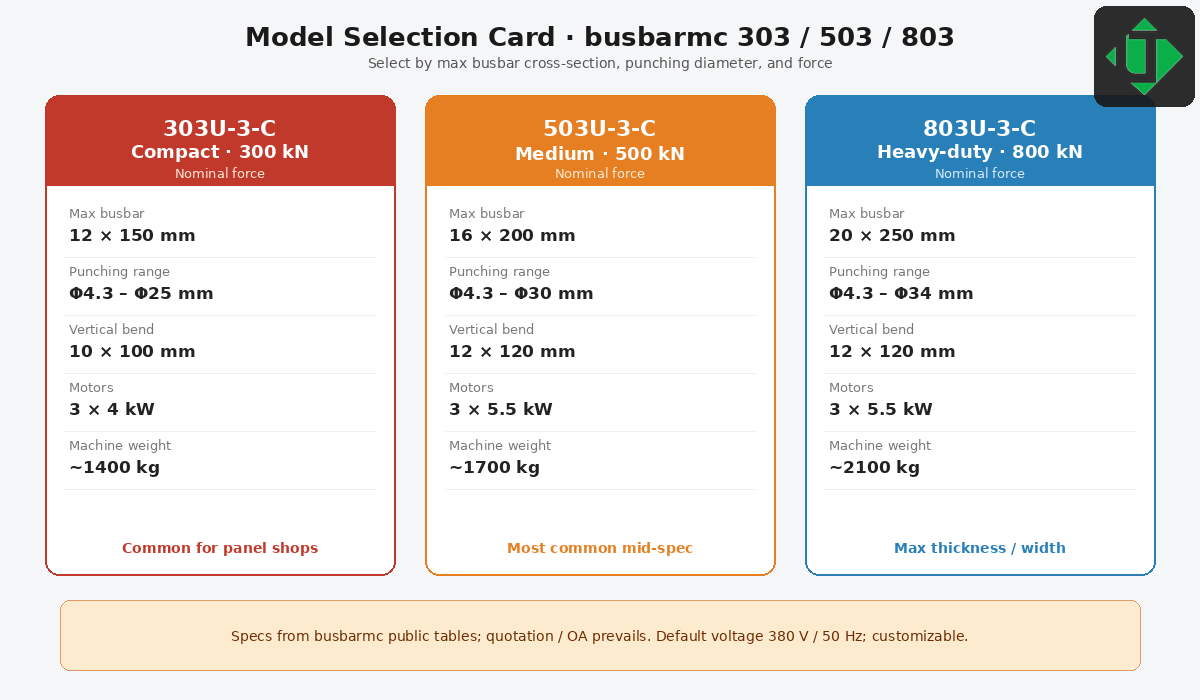
Model selection card: LT 303U-3-C / 503U-3-C / 803U-3-C (force · busbar · punch)
3. Applications
- LV / MV switchgear and control panels, including IEC 61439 assemblies
- Transformer terminals and LV connections
- Busbar trunking, distribution panels, box-type substations
- Copper/aluminum busbar workshops for power-equipment builders serving industrial and utility customers (including EETC-related projects where applicable)
Process families: punching (round/oblong/rectangular/square/chamfer); shearing to length; bending (flat, vertical, U/Z/L; optional emboss/twist).
4. Station-by-station technical deep dive
4.1 Bending station
Conclusion: Differentiation lives in mode library, angle control, die radii, and copper/aluminum springback.
- Control: Siemens PLC · Interface: HMI / mobile panel
- Automatic: select mode → enter length/thickness/angle → run
- Manual: set forward/reverse stroke limits on first piece for unconventional bends
- Vertical bend examples: 10×100 mm (303); 12×120 mm (503/803)
- Default dies: R3, R5, R10, R80 or R50, plus U-shape
- Close-bend warning: distance under ~40 mm → engineering review
- Published accuracy: about ±1° / repeat ±0.5° (confirm on OA)
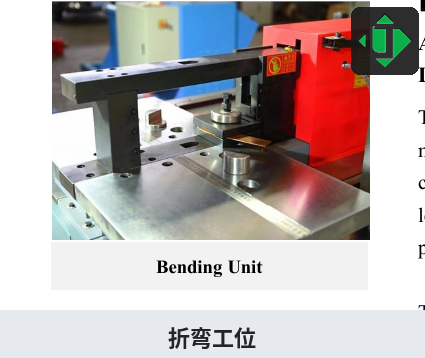
Bending station photo: worktable and bending die area
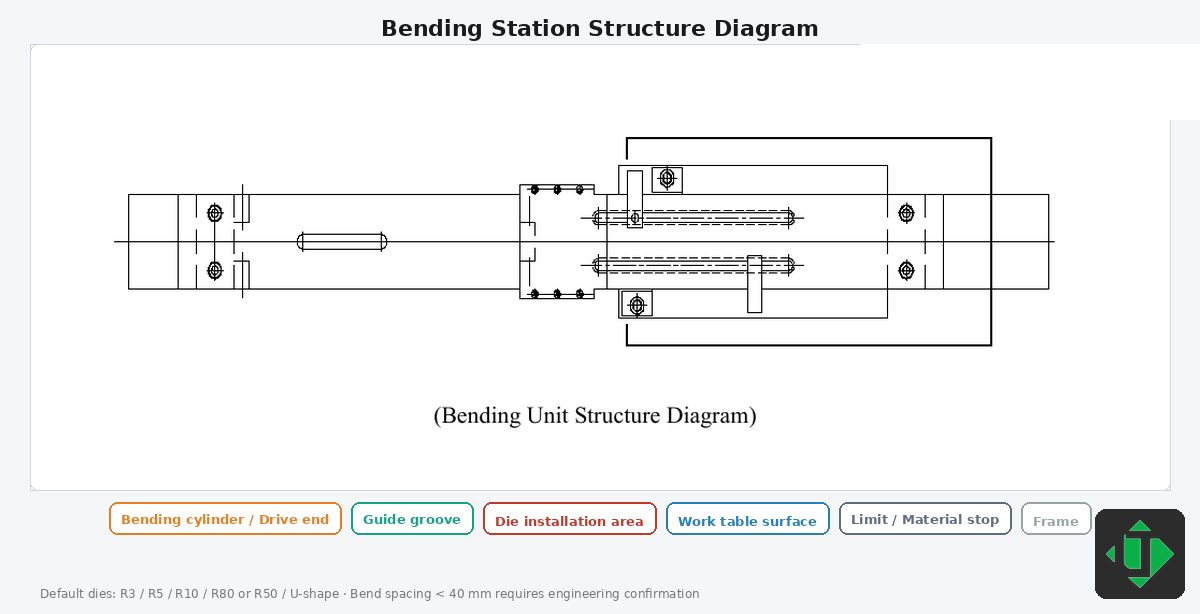
Bending station structure diagram (cylinder, guide, die mount, table, stops)
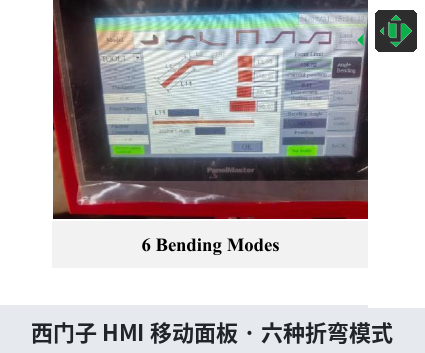
Siemens HMI mobile panel: six bending modes screen
Copper vs aluminum springback: Aluminum often needs larger springback compensation and minimum inside radius. Do not copy copper programs onto aluminum without a trial bend + compensation table.
4.2 Punching station
Conclusion: Quality = aligned dies + tonnage margin + the hole family you actually need.
- Commonly six punching positions on a turret
- Published ranges: 303 Φ4.3–Φ25; 503 Φ4.3–Φ30; 803 Φ4.3–Φ34
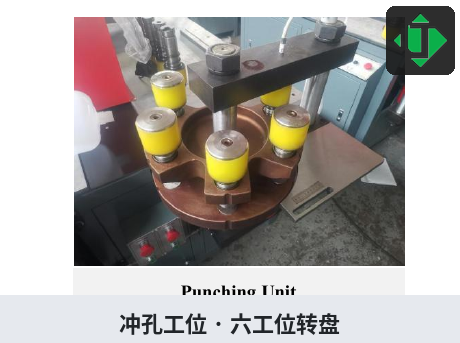
Punching station photo: 6-station turret and punch dies
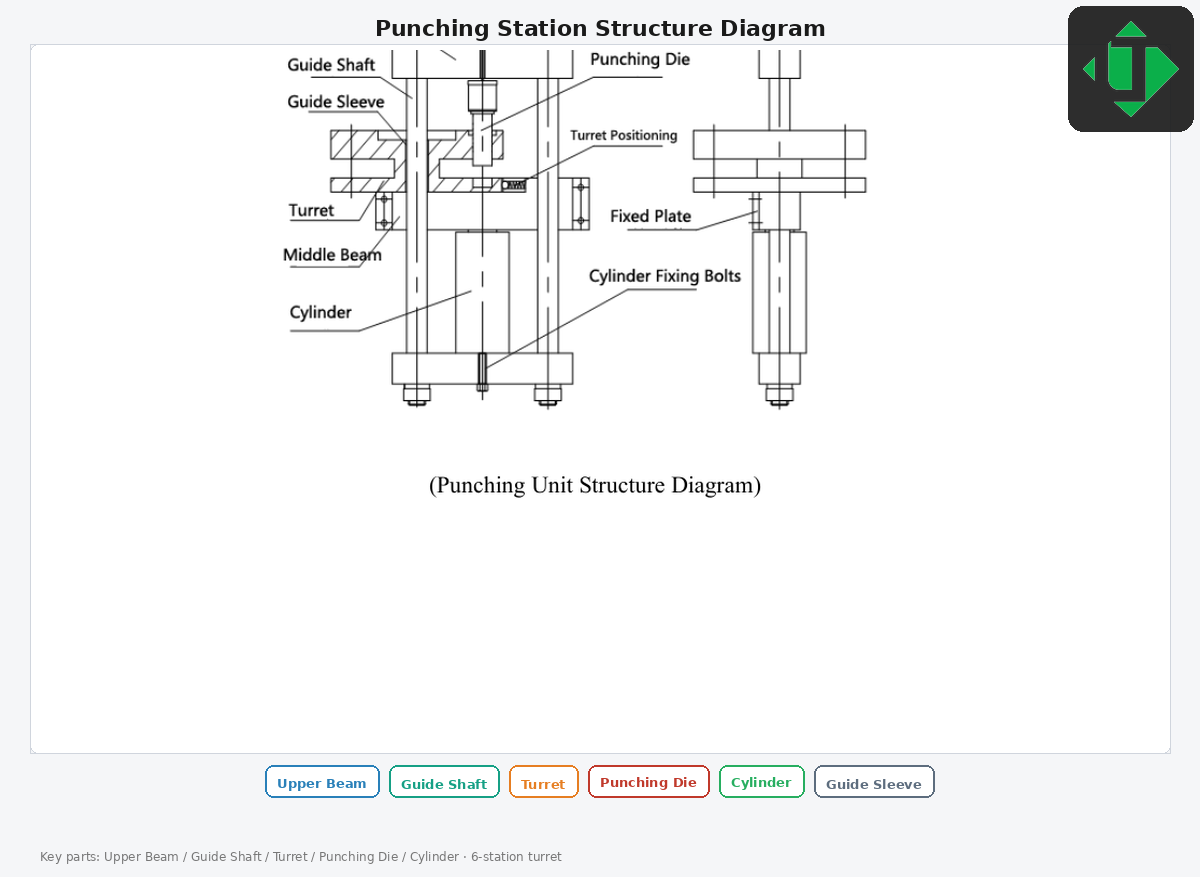
Punching station structure diagram (upper beam, guide shafts, turret, punch die, cylinder)
Illustrative starter dies (confirm on order): round Ø7/9/11/13/17; oblong Ø11×15, Ø13×18, Ø17×21.
4.3 Cutting / shearing station
Conclusion: Clean face + controlled tear zone from alloy-steel tooling and stable hydraulics.
- Tear zone target often cited under ~25% — use as a FAT measurement, not a slogan
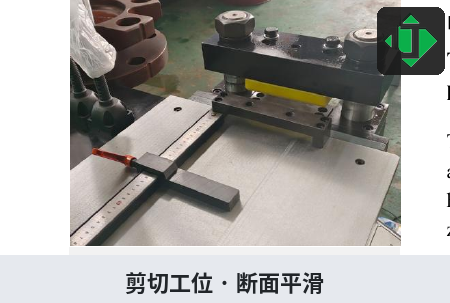
Cutting (shearing) station photo: dual-pillar shear head and scale
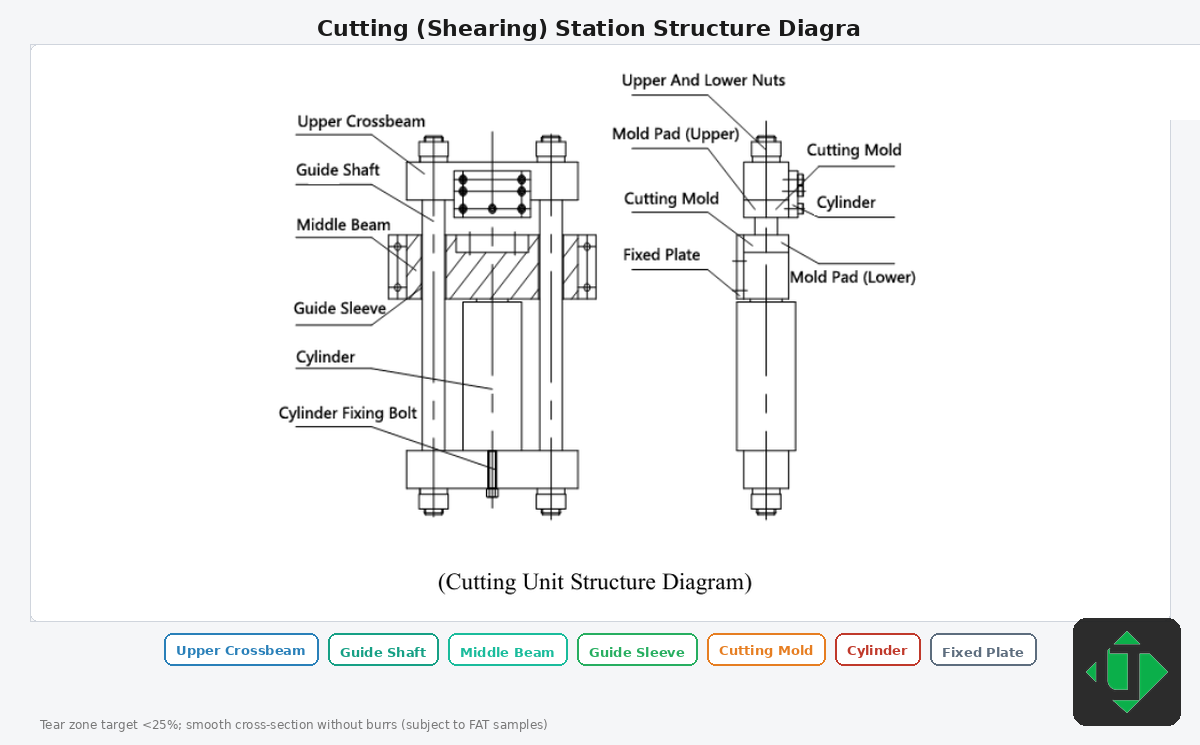
Cutting (shearing) station structure diagram (upper crossbeam, guides, cutting molds, cylinder)
4.4 Hydraulic center
Three motors/pumps so punch, cut, and bend can run simultaneously or in sequence; throughput still depends on loading and fixtures.
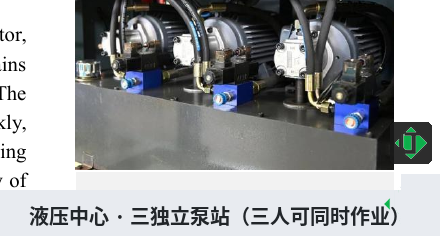
Hydraulic center: three independent pump units for three simultaneous operators
4.5 Electrical control
- Siemens PLC on bending · Default often 380 V / 50 Hz · Custom voltages at order (e.g. 400 V 60 Hz, 415 V 50 Hz, 220 V 60 Hz)
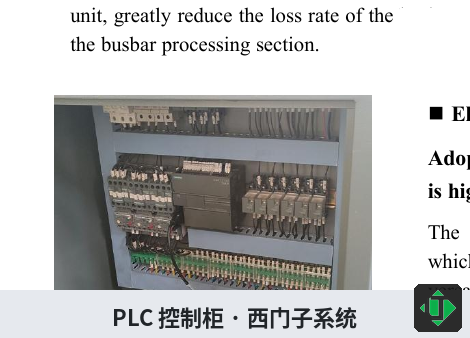
PLC control cabinet interior (Siemens system)
5. Model comparison — 303U-3-C / 503U-3-C / 803U-3-C
| Entity | 303U-3-C | 503U-3-C | 803U-3-C |
|---|---|---|---|
| Nominal force (kN) | 300 | 500 | 800 |
| Punching diameter (mm) | Φ4.3–Φ25 | Φ4.3–Φ30 | Φ4.3–Φ34 |
| Max thickness (mm) | 12 | 16 | 20 |
| Max width (mm) | 150 | 200 | 250 |
| Max shear thickness / width (mm) | 12 / 150 | 16 / 200 | 20 / 250 |
| Max horizontal bend width / thickness (mm) | 150 / 12 | 200 / 16 | 250 / 20 |
| Max vertical bend size (mm) | 10×100 | 12×120 | 12×120 |
| Motor power | 3×4 kW | 3×5.5 kW | 3×5.5 kW |
| Bend precision / repeat (published) | ±1° / ±0.5° | ±1° / ±0.5° | ±1° / ±0.5° |
| Approx. mass (kg) | ~1400 | ~1700 | ~2100 |
Quick selection: 303 ≈ 12×150 / Φ25 class · 503 ≈ 16×200 / Φ30 · 803 ≈ 20×250 / Φ34.
6. Architecture comparison
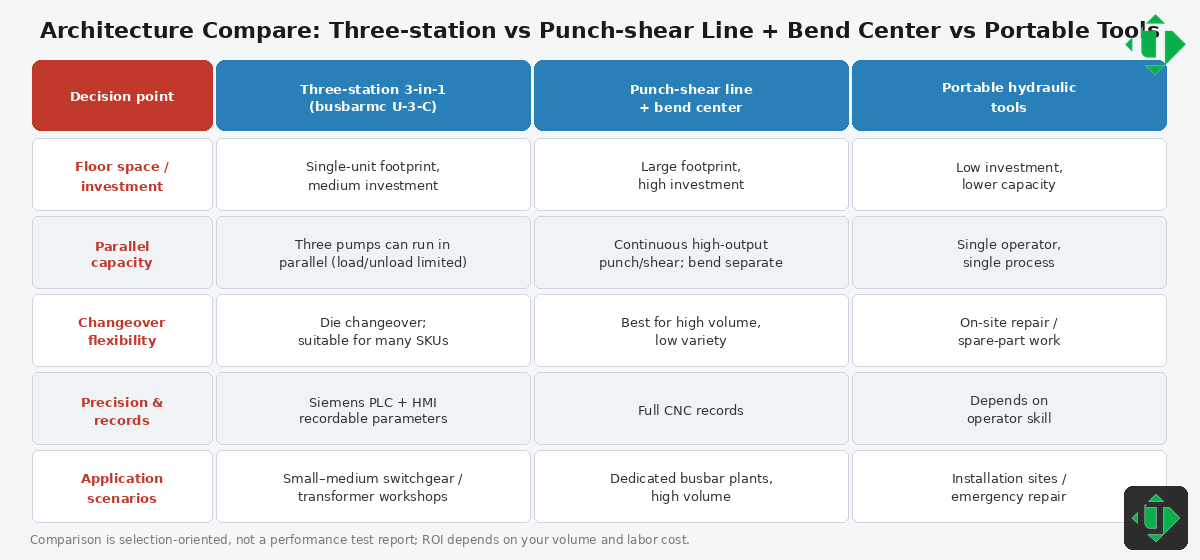
Architecture compare: three-station 3-in-1 vs punch-shear line + bend center vs portable tools
| Decision factor | Three-station (LTMC U-3-C) | Punch–shear line + bend center | Portable hydraulic tools |
|---|---|---|---|
| Footprint | One machine | Larger line | Minimal |
| Best for | SME workshops, mixed jobs | High volume / deep automation | Field repair / small mods |
| Parallel work | Possible with 3 pumps | Natural station separation | Usually single task |
| Risk if wrong choice | Capacity ceiling too low | Over-invest for low volume | Poor production repeatability |
7. Recommended process flow (SOP)
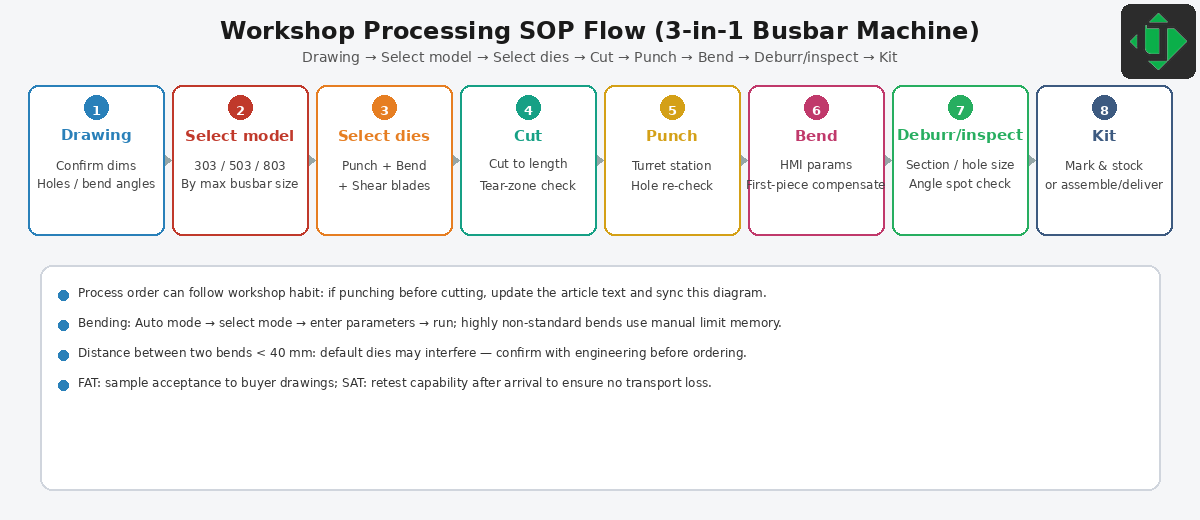
Workshop SOP: Drawing → Select model → Select dies → Cut → Punch → Bend → Deburr/inspect → Kit
- Receive drawing → 2. Select model class → 3. Select dies → 4. Cut to length → 5. Punch → 6. Bend (springback table) → 7. Deburr/inspect → 8. Mark/kit
8. Tooling and accessories
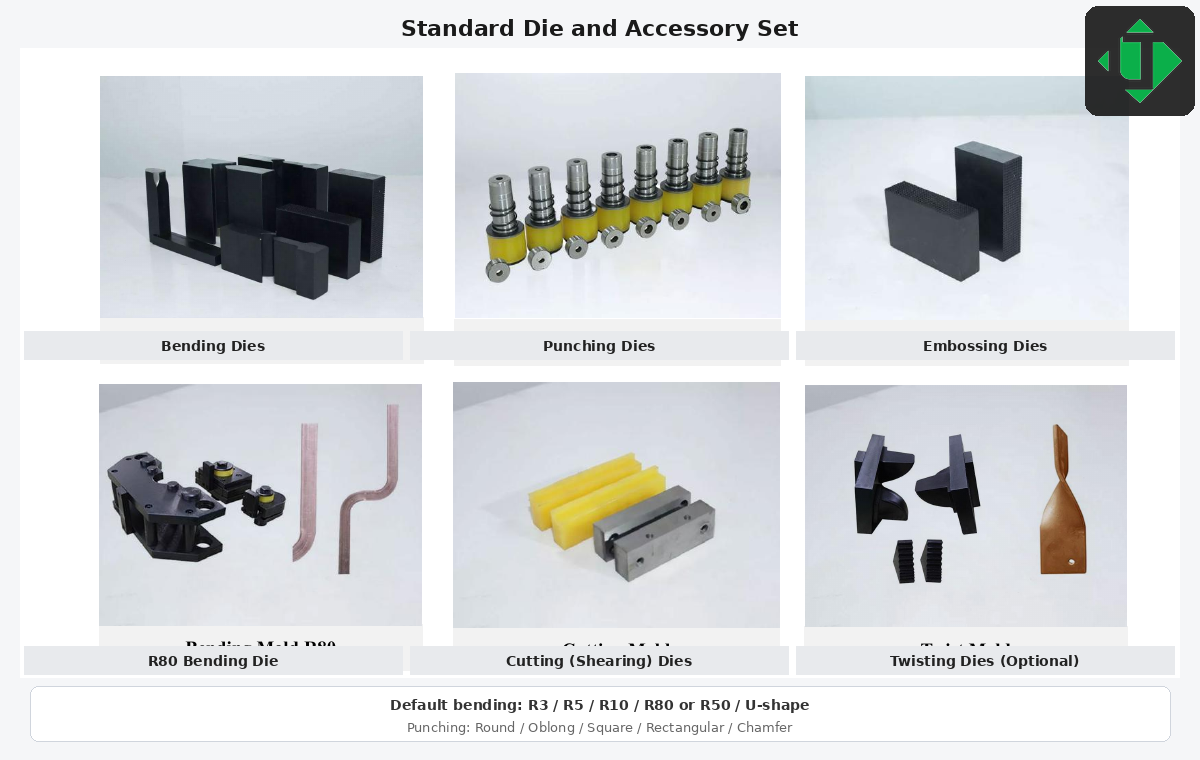
Standard die and accessory set with English labels (default radii and punch shapes)
- Round / oblong / rectangular / square punches · Bend dies R3/R5/R10/R80 or R50 / U-shape · Embossing · Cutting · Twist (option) · Spare seals/blades for TCO
9. RFQ checklist
- Material (Cu/Al; alloy/temper) · 2. Max width×thickness · 3. Hole list · 4. Bend list · 5. Tolerances · 6. Monthly volume · 7. Voltage/frequency · 8. Preferred model · 9. Mold package · 10. FAT drawings · 11. Incoterms and commissioning/training scope · 12. Spare kit
10. FAT and commissioning outline
FAT: buyer samples for punch/shear/bend; angle after compensation; voltage/HMI; record settings.
After arrival: level, hydraulics and safety checks; repeat a critical sample during commissioning; train auto vs manual bend; hand over the spare-parts kit. LT / LTMC supports Egyptian factories with guidance, commissioning, operator training, spares, and remote support.
11. Maintenance and TCO
Document die life (clearance, lubrication, Al oxide), shear blade life, hydraulic oil/seals, and Siemens-class spares. Budget a spare kit with the machine so a 10th of Ramadan or Alexandria cell is not waiting on a single worn tool.
12. Safety notes
PPE; never exceed published width/thickness; lock out before die changes; keep hands clear of bend dies; separate Cu/Al tooling practices if required.
13. FAQ
What is a three-station busbar machine?
A three-station (3-in-1) busbar machine combines punching, cutting, and bending for copper/aluminum busbars in switchgear and power distribution.
How is it different from a CNC punch–shear line?
One footprint for SME workshops vs a dedicated line + bend center for high volume and deep nesting.
Can all three stations work simultaneously?
Yes with three independent hydraulic units; throughput still depends on loading/fixtures.
Which model should an Egyptian panel builder choose?
Map hardest bar/hole/bend to 303U-3-C (12×150), 503U-3-C (16×200), or 803U-3-C (20×250).
Punching capacity?
About Φ4.3–Φ25 / Φ30 / Φ34 on 303/503/803 — confirm on quotation.
Bending accuracy?
About ±1° / repeat ±0.5° on published tables; verify on FAT.
Copper vs aluminum programs?
Yes — keep material-specific springback tables.
Typical molds?
Selected round/oblong punches, R3/R5/R10/R80 (or R50), U-shape, embossing, cutting; twist often optional.
Voltage?
Default often 380 V 50 Hz, which matches common Egyptian industrial supply; other industrial voltages if declared at order.
Public product information?
https://egyptbusbar.com/ — plus the order acknowledgment for customer-facing claims. See also 3-in-1, punching and cutting, and bending product pages.
Next step for Egyptian workshops
Share representative busbar drawings, copper or aluminum grade and temper (for example Cu-ETP / C11000 where specified), max width × thickness, and FAT sample requirements. LT / LTMC can support Egyptian panel and transformer shops with technical guidance, commissioning, operator training, spare parts, and remote support. Product pages and contact:
- 3-in-1 busbar machine
- CNC busbar bending machine
- CNC busbar punching and cutting machine
- egyptbusbar.com · Contact
Where a public page and the order acknowledgment differ, treat the OA and FAT samples as the source of truth.
Latest News
How a Busbar Bending Machine Works — Principles and Operation for Egyptian Workshops
How a busbar bending machine works in Egyptian workshops: principles, springback, flat vs edge bends, and official LT CNC operation steps 001–013 on 3-in-1 bend stations 303U-3-C /...
2026-11-13
Three-Station Busbar Machine Technical Guide for Egyptian Factories — LT 303/503/803
Technical guide to three-station (3-in-1) busbar machines for Egyptian factories: punch, cut and bend on LT 303U-3-C / 503U-3-C / 803U-3-C, with model cards, station diagrams, RFQ ...
2026-11-10
What Is a Busbar Machine? Cutting, Punching and Bending for Egyptian Switchgear
A busbar machine cuts, punches and bends copper or aluminum busbars for Egyptian switchgear. Learn how 3-in-1 stations work and how to choose LT 303U-3-C / 503U-3-C / 803U-3-C.
2026-11-10
Busbar Punching Guide for Egyptian Panel Shops — Hole Accuracy, Dies and Positioning
Busbar punching quality in Egyptian panel shops is finished hole position from the datum, size, burr and edge distance. Match turret dies and clearance on LTMC 303U-3-C / 503U-3-C ...
2026-11-10
How to Use a Busbar Bending Machine in Egyptian Switchgear Production
Production bending in Egyptian switchgear shops needs locked recipes, tooling and first/mid/last checks so released angles stay stable across shifts on LT 303U-3-C / 503U-3-C / 803...
2026-11-10
What Is a Busbar Bending Machine and How Does It Work in Egyptian Workshops?
A busbar bending machine forms copper or aluminum bars to drawing angles for Egyptian workshops. Judge released angle, radius and surface—not tonnage alone—on LTMC 3-in-1 bend stat...
2026-11-10
LTMC CNC Busbar Machine Egypt
Professional CNC Busbar Machine & Related Equipment Manufacturer.
Company Strength
Adequate Inventory
Fast Shipping
Our Products
CONTACT US
Address: No.9566 Jingshi Rd.Jinan City , Shandong , China


© COPYRIGHT 2025 LTMC CNC Busbar Machine Egypt

Contact Us
Our passion is to bring your ideas to life. Work with our design team to create a one-of-a-kind custom finish or cladding system to create a truly unique space. Together we can make your story stand out. If you need something to request a sample, request pricing, or request a demo, please fill out the contact form below. Explain your request in as much detail as you can and a representative will contact you within 1 business day.